


Fish Sort Puzzle
4.8627.00 Reviews
App Specs
- Version
- 1.5111
- Updated On
- License
- Free
- Downloads
- 1,000,000+
- Developer
- Shycheese
- Categories
- Puzzle
- Platform
- Android
Screenshots
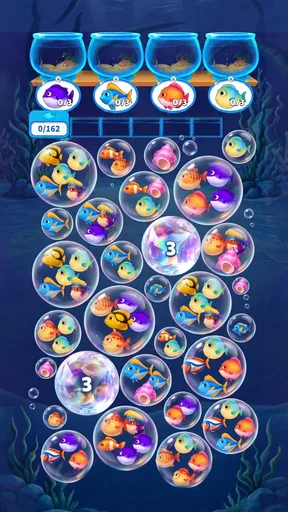
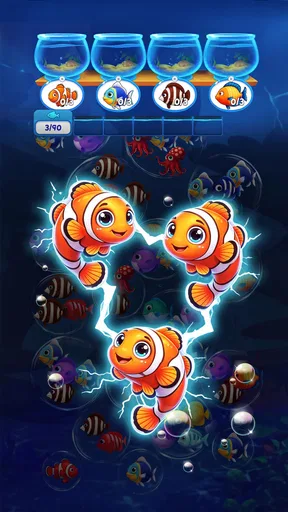
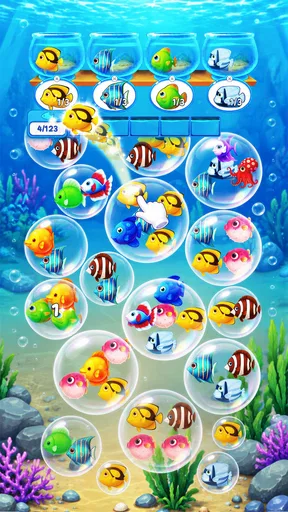
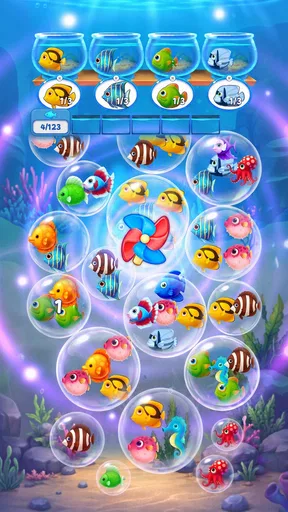
 Analysis by AppCompare
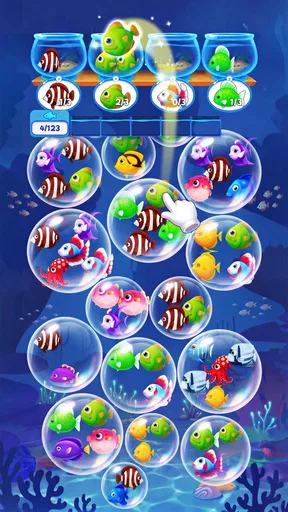
Sorting colored fish into bowls has an appealingly simple promise: look at a crowded arrangement, work out where each fish belongs, and make the scene orderly one move at a time. In my experience, that makes Fish Sort Puzzle an easy game to understand but one that can still ask for a little thought. Its cartoon underwater theme softens the puzzle-solving, while the core appeal is the satisfying moment when a messy set of bowls starts to make sense.
A good first test: one board, no hurry
If you are unsure whether this is your kind of puzzle, I would start with a single board and pay attention to two things: whether the fish are easy to distinguish on your screen, and whether planning moves feels pleasant rather than like work. That small trial answers more than the cheerful theme does. A person who enjoys sorting objects in real life may find the visual task soothing, while someone who prefers puzzles with written clues could find the same board frustrating.
A useful everyday moment is a short wait when you want something to occupy your attention without demanding a long setup. I would play one puzzle while waiting for a coffee or taking a break between errands, then stop rather than turn it into an extended session. The game’s appeal is in considering a compact arrangement, not in needing to keep a story or a lengthy chain of events in mind.
How the puzzle feels to play
I find the appeal of this puzzle lies in how a board invites a quick plan before the first tap, rather than asking me to react on the fly. This section looks at how the fish-and-bowl layout shapes that experience, then turns to the practical question of whether the visuals and controls feel comfortable in different situations.
Readability and navigation
The basic idea is familiar from color-sorting puzzles: use the bowls as temporary space while grouping matching fish. That clear visual goal is a helpful starting point for new players, including anyone who would rather learn by looking at a board than work through a long explanation. The fishbowl presentation gives the sorting task a character of its own without changing what makes the puzzle engaging: planning a sequence of moves rather than tapping at random.
I find this kind of game easiest to follow when I pause before moving anything. Pick one color to organize, notice which bowls can accept it, and keep track of where you may need to park other fish temporarily. That small habit can prevent a board from becoming harder to untangle. It also makes the game more approachable for a child or a casual player who is still learning to think several moves ahead.
Developed by Shycheese, this is a free puzzle game for Android, with a 4.8 average from around 66,000 ratings and over a million installs. The current version is 1.5111, and it is listed for Android 6.0 and later. Those details make it easy to judge whether it fits an older compatible device, though the version number alone does not tell you how a particular screen or device will feel in use.
Worth Reading Before You Choose

Switching to Android Auto Means Rethinking Your Driving Routine

Google Calendar Makes a Crowded Week Easier to Manage

Baby Panda World Brings Quick Play to Modern Phones, but Its Game Library Feels Busy

ESPN’s Live Game View Makes Following Close Games Easier

QuizzLand Review: A Good Fit for Short Trivia Breaks, Not Every Player

Basketball Stars: Multiplayer Is Fast, but Can It Recover When Matches Go Wrong?
Navigation matters in a sorting game because the board itself needs to remain the focus. I would recommend approaching each puzzle with a deliberate tap-and-check rhythm, especially if you are playing on a small phone. Before committing to a move, look at the receiving bowl and the space that will remain afterward. This is more useful than rushing through repeated taps, since one seemingly harmless move can take away the room you need to separate colors later.
If a board looks confusing at first glance, try tracing just one color through the arrangement before making a move. That gives your eyes a specific job and can make the available spaces easier to assess. I also find it helpful to pause after moving fish rather than immediately tapping again; checking the new layout reduces the chance of losing track of which bowl was meant to serve as temporary storage.
Motor and sensory considerations
Because the main interaction is moving fish between bowls, the game is most comfortable for someone who can make reasonably precise screen selections. If you sometimes mis-tap small targets, slow down and aim for the center of the bowl rather than tapping near its edge. A steady pace is a practical advantage here: the challenge comes from choosing a good sequence, not from reacting quickly.
The colorful fish and bowls give the puzzle its visual identity, but color is also central to recognizing what belongs together. That can be a barrier for players who have difficulty distinguishing certain colors, or for anyone viewing the screen in glare or with low brightness. If colors look too similar on your device, try adjusting the screen brightness or changing your viewing angle before deciding whether the puzzle is comfortable. If the pieces remain hard to tell apart, a word-based or symbol-based puzzle may be a better fit.
For sensory comfort, the slower, move-by-move nature of sorting can be gentler than games built around rapid movement or constant reaction. Still, a bright, colorful board may not suit everyone, and extended close viewing can become tiring. I would treat it as a short-session game: solve a few boards, then take a break if you notice eye strain or lose track of the colors. That approach also helps preserve the pleasure of figuring out each arrangement instead of turning play into a long, repetitive stretch.
One useful way to make the puzzle less mentally noisy is to focus on a single color group at a time. Rather than scanning every fish after each move, decide which color you are trying to free up, then check only the bowls that affect that plan. This is a simple self-guided workflow, not a special feature, but it reduces the amount of visual information you need to process at once.
For players who use a phone with one hand, comfort will depend on the device and how easily they can reach the bowls on screen. I would not assume that every move will be equally convenient from every grip. If reaching across the display makes taps less accurate, switching hands or briefly using both can be more practical than trying to play quickly. The puzzle gives you room to take that moment because its challenge is not about speed.
Where it fits into everyday life
Fish Sort Puzzle suits small gaps in the day: a few minutes while waiting for an appointment, winding down after a task, or taking a quiet break between more demanding activities. Since the central activity is arranging fish rather than following a story, you can dip in without needing to remember a plot or a complicated set of controls. I would not choose it when I want a deep, continuous session with a strong narrative; I would choose it when I want a compact problem to think through at my own pace.
It can also work as a low-pressure shared activity. A parent and child, or two friends, can look at a board together and talk through which bowl should be used as temporary space. That turns the game into a small exercise in planning and explaining choices. It is not automatically suitable for every child just because its content rating is Everyone, though: a child who finds color-based sorting frustrating may need help or may simply prefer another kind of puzzle.
Compared with number-placement puzzles, this game asks less reading and calculation, but more visual comparison and spatial planning. Compared with fast arcade games, it puts less emphasis on timing and more on anticipating consequences. And compared with word puzzles, it offers a more direct visual task, though that same reliance on color can make it less suitable for some players. The best alternative depends on what you want: choose a logic puzzle with symbols if color recognition is a concern, or a timed game if you are specifically looking for speed and pressure.
For a shared device, I would make the first try a supervised one if a child is playing. The age rating indicates broad content suitability, but the feel of the task matters just as much: can they tell the fish apart, and are they comfortable making the selections? If either answer is no, a picture-matching game with more distinct shapes or a puzzle that uses numbers may be a kinder choice than encouraging them to push through a mismatch.
Practical trade-offs before you install
The game is free to download, with in-app purchases listed from $1.99 to $99.99 per item. That range is worth knowing if you prefer to avoid purchases or are setting up a device for a child. I would check the purchase settings on the device before handing it over, and treat any optional spending as something to review rather than assume is needed to enjoy the basic sorting idea. The price range by itself does not explain what each item offers, so it is sensible to make a decision at the point of purchase rather than rely on assumptions.
The age rating is Everyone, which signals broad content suitability, not a guarantee that the controls or visuals work equally well for every ability. If you are choosing the game for someone else, let them try a board and see whether the fish remain easy to distinguish and the bowl selections feel comfortable. A quick hands-on check is more informative than judging accessibility from the theme alone.
For players who like to improve their solving habits, one practical method is to keep one bowl’s role in mind as you play: is it a destination for a nearly finished color, or temporary storage? Changing its purpose repeatedly can create a tangle of extra moves. Before using an apparently empty space, consider what you will need it for two or three moves later. This sort of planning is where the puzzle can become satisfying, but it is also the main source of friction for people who want a game that rewards tapping without much thought.
At the same time, I would not mistake a simple-looking board for a promise of effortless play. Sorting puzzles can become repetitive if you do not enjoy the underlying pattern of testing a plan, moving pieces, and correcting course. They may also feel frustrating if a mistaken tap or a limited view of the board disrupts your train of thought. When that happens, stepping away and returning with a fresh look is often more useful than making a string of hurried moves.
One trade-off compared with a broad puzzle collection is focus: this game gives its fish-and-bowl sorting idea room to be the main event, but that also means it may not satisfy someone who wants to switch between word, number, and spatial challenges in one sitting. If you are choosing a game for a commute or a varied daily routine, a collection can offer more variety. If you already know that arranging colors is the part you enjoy, the focused format is a strength rather than a drawback.
Who will enjoy it—and who may prefer something else
I would recommend it to casual players who enjoy visual organization, patient trial and error, and the satisfaction of turning a cluttered arrangement into neat groups. It is also a reasonable pick for someone who wants a puzzle that does not depend on fast reflexes. The cartoon fish give the sorting task a lighter mood, while the basic challenge still offers room to plan rather than simply react.
I would steer away from it if color differences are difficult for you to perceive, if precise tapping is uncomfortable, or if you want puzzles with explicit text, numbers, or symbols to distinguish pieces. It is also not my first choice for a player who needs a highly varied challenge or a strong sense of progression in every session; the appeal rests chiefly on the fish-sorting activity itself. In those cases, a non-color logic game or a more varied puzzle collection may be a better match.
Fish Sort Puzzle has earned a 4.8 average from its player ratings, but a strong average cannot settle the personal question of whether its visual style and sorting rhythm suit you. The useful test is simple: try a short session, see whether you can identify the fish comfortably, and notice whether planning the bowl order feels relaxing or irritating. That gives you a better answer than popularity alone.
For someone who likes to solve by talking through possibilities, the board can also invite a simple back-and-forth: “If I move this color now, what space will be left?” That makes it a more engaging shared pastime than merely taking turns tapping. But it will not suit every social setting; a group looking for lively competition, conversation-driven play, or a fast party game should choose something designed around those interactions instead.
An inclusive verdict
For me, the game’s strongest quality is that its central task is immediately understandable while still rewarding a little foresight. Its calm, visual format can fit short breaks and players who prefer deliberate moves over quick reactions. The same design creates clear limits: color carries much of the information, and precise selection can matter, so it will not be equally comfortable for everyone.
If a fish-sorting puzzle sounds appealing, I think it is worth trying as a free, casual option, especially if you enjoy organizing patterns and do not mind working through a board carefully. Make the first session a practical test of visibility and tapping comfort, and keep purchases in mind if the device is shared with a child. When color recognition or screen precision is a concern, choose a puzzle with clearer non-color cues instead. That is the fairest way to judge whether this particular underwater sorting game belongs in your rotation.
Overall, I see it as a specific, low-pressure choice rather than an all-purpose puzzle recommendation. Its strongest audience is someone who finds color grouping satisfying and is happy to pause, plan, and revise a move. If that sounds like you, the fishbowl theme adds a friendly frame to a familiar sorting challenge; if you need stronger visual distinctions, more varied puzzle types, or a different interaction style, another game will serve you better.
Pros
- Simple drag-and-drop controls are easy to learn.
- Short levels make it convenient for quick play sessions.
- Sorting mechanics offer a satisfying visual payoff.
- No special gaming skills are needed to get started.
- The fish theme gives the puzzles a light
- playful feel.
Cons
- Later puzzles may feel repetitive if you play for long stretches.
- Some levels can require trial and error to solve.
- Ads may interrupt play
- depending on the version.
- Small fish or containers may be harder to tap on compact screens.
- Progress may be lost if the game is removed without cloud backup.
FAQs for Fish Sort Puzzle
How do you play Fish Sort Puzzle?
Fish Sort Puzzle is a sorting game built around arranging colorful fish into matching groups. You move fish between available spaces, planning each move so that fish of the same color can be gathered together. The basic controls are easy to understand, but later levels can require more careful planning as the board becomes more crowded. Check the current level’s rules and available moves, since details such as space limits may vary.
Is Fish Sort Puzzle free to download and play?
The game may be available to download without an upfront charge, but that does not necessarily mean every part of the experience is free. Many mobile puzzle games include optional purchases, advertisements, or paid items, and their availability can differ by platform or region. Review the listing in the Google Play Store or Apple App Store before installing, and check its in-app purchase details if you want to avoid unexpected costs.
Does Fish Sort Puzzle work offline?
Some levels in Fish Sort Puzzle may be playable without an internet connection, which can make the game convenient for travel or short breaks. However, features such as advertisements, reward claims, cloud saves, events, or purchases may require a connection, and offline access can depend on the game version. If playing offline matters to you, test it on your device and avoid assuming that progress will sync until you reconnect.
Is Fish Sort Puzzle suitable for children?
The color-matching format and straightforward controls may be approachable for a wide range of ages, but suitability depends on the individual child and the game’s current content. Before allowing a child to play, check the age rating and privacy information on the relevant app store, as well as whether the game includes ads, in-app purchases, or online features. Parental controls and purchase restrictions can help manage access.
What should I check before downloading Fish Sort Puzzle?
Confirm that the app is offered by a trusted publisher and is compatible with your Android or iOS device. App-store listings can change, so review the current screenshots, description, permissions, age rating, recent reviews, and update history rather than relying on older information. Also consider storage requirements and whether the game contains ads or optional purchases. Downloading through the official app store is the safer way to install it.


